What Does Premium Hardwood Flooring Actually Cost in Atlanta?
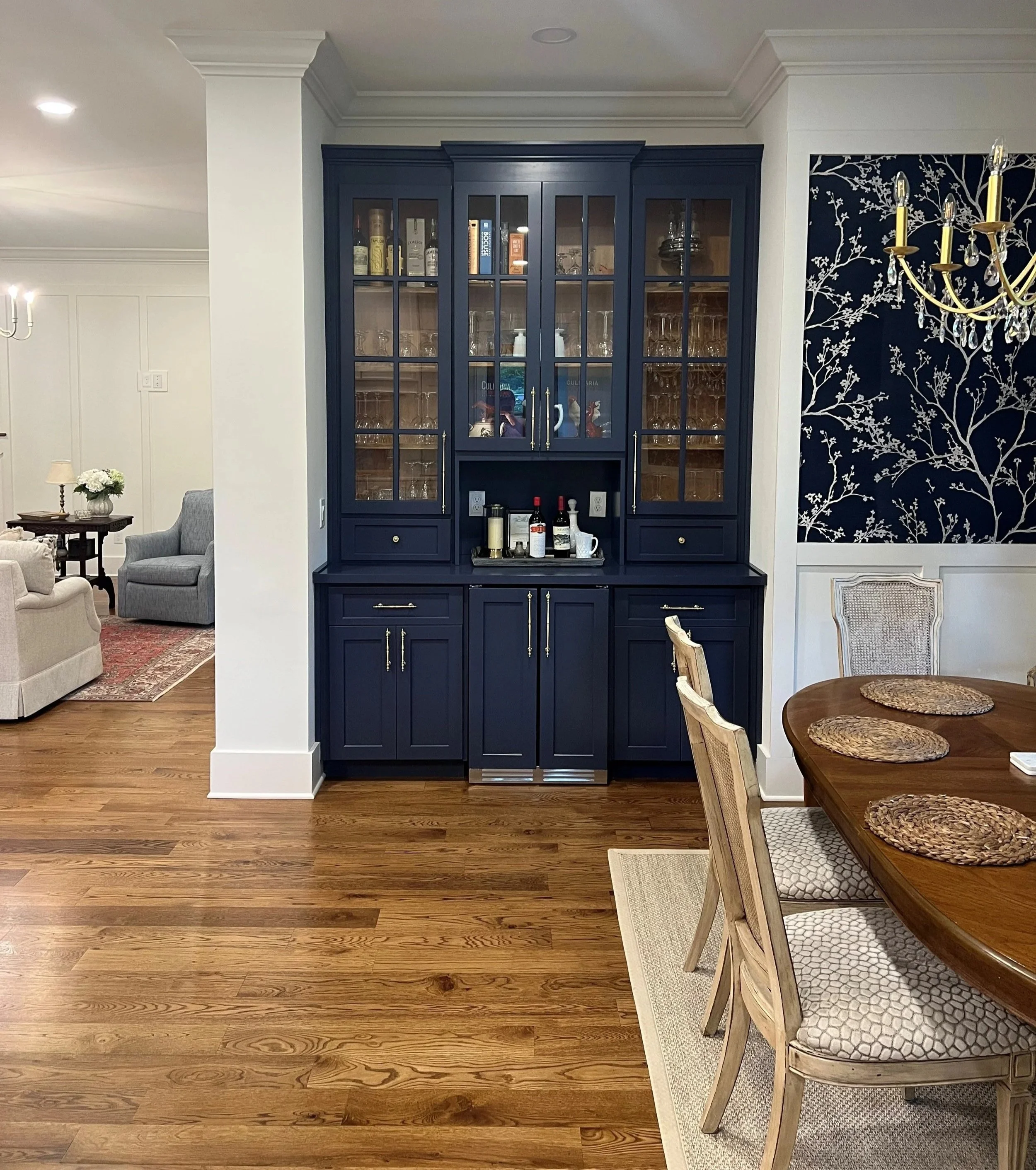
5” White Oak (#1 Grade) with Water Based Poly (Traditional Color)
Ask a flooring company what hardwood costs and you'll get "it depends, let's schedule a consultation." It does depend. It's also a dodge. We manufacture and install premium wide-plank hardwood flooring here in Peachtree Corners, from rough-sawn lumber to finished floor, so here are the real numbers in this market.
One thing this guide is not: a cheap flooring roundup. You can spend less than anything below on LVP or bargain engineered product with a paper-thin wear layer over a non-premium core. Those are different products for a different conversation. This is the real thing: genuine hardwood that can be sanded, refinished, and lived on for generations.
The Short Answer
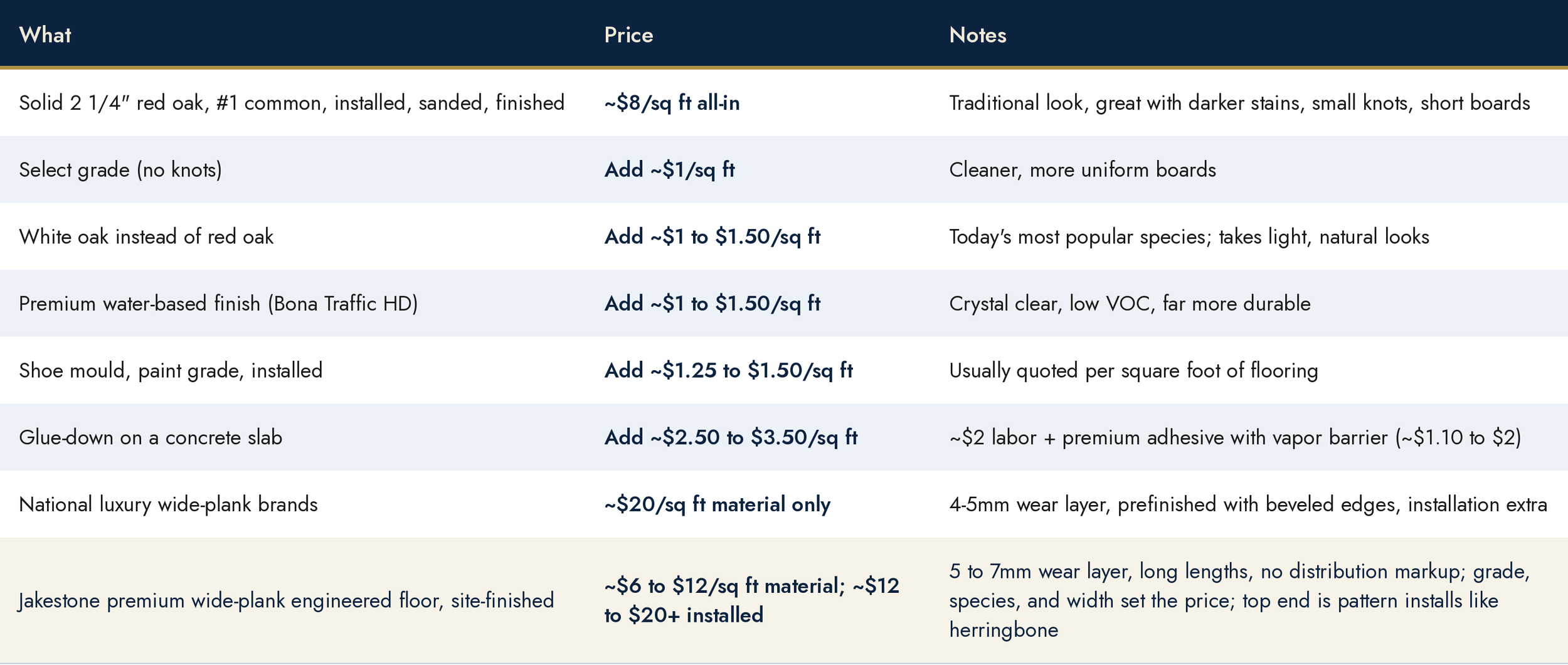
What Premium Hardwood Really Costs in Atlanta
The table works like a menu: start at $8 and stack your upgrades. Two examples:
Select-grade white oak, nailed down, finished in Bona Traffic HD: ~$8 + ~$1 (no knots) + ~$1 to $1.50 (white oak) + ~$1 to $1.50 (premium finish) = ~$11 to $12 per square foot, all-in.
Traditional red oak with shoe mould and the premium finish: ~$8 + ~$1.25 to $1.50 (shoe) + ~$1 to $1.50 (finish) = ~$10.25 to $11 per square foot.
Going on a concrete slab? That means engineered flooring and a glue-down, so add ~$2.50 to $3.50 to whatever floor you build.
One distinction across these prices: the national-brand product is factory-prefinished; the rest is traditional custom hardwood, finished on-site. Site-finished floors go in raw and get sanded and finished as one surface, with no bevels between boards and no visible seams. Prefinished floors show a subtle micro-bevel at each plank edge, so you see the individual boards, but the finish is smooth, durable, and premium in its own right.
And to be clear about what this guide covers: none of this is cheap flooring. LVP, thin-wear-layer engineered, boards with non-premium cores, that's a different market at a different price point, and these numbers shouldn't be compared against it. Everything priced here is real hardwood, built to last a lifetime or more.
Now the explanations, because the notes column is where quotes go sideways.
The $8 Floor: Great Price, Specific Look
You can get a real, solid hardwood floor installed, sanded, and finished in Atlanta for about $8 per square foot. Know what you're getting: 2 1/4 inch red oak in #1 common grade. Red oak has a warm, reddish tone that ambers over the years under an oil finish, and it takes darker stain colors beautifully. #1 common means small knots and color variation from board to board. Grade is purely about looks, by the way. A knotty board is just as strong as a clear one.
It's a different look from the clean, premium wide-plank floors everyone falls in love with when they walk through a new home. Those are wider boards, longer lengths, lighter and more natural in tone. Red oak strip is the traditional look. And there's nothing wrong with that: it's a beautiful product that will last a very long time, and if the traditional look is your look, don't let anyone talk you into spending more than $8 a square foot for it. If you want white oak instead, today's most popular species and the one that takes those light, natural stain colors, add $1 to $1.50 per square foot.
The math: material runs $2 to $3 per square foot. Install runs $5 to $6, and that covers everything: nail-down, sanding, stain, and three coats of oil-based poly, materials included. The $5 vs. $6 gap matters. At $6 a good installer does it right and makes a modest living. At $5 they're just trying to stay busy, and there's no margin left to come back if something needs fixing. Anything near $7 all-in is too thin for the job to be done right. $8 is fair, for you and for the crew.
One more thing about floors at this price: the bundles are full of "shorts," boards down to about a foot long. More end seams, busier look. The long clean planks you see in premium homes, 6 to 12 footers, are a different product, because long clear lumber is a lot harder to get out of a log.
The $20 Floor, and Where Jakestone Lands
At the top end, a premium national brand runs around $15 - $20+ per square foot for the flooring alone. That buys wide-plank white oak, 8 to 10 inches, prefinished, with a 4 or 5mm wear layer, in long lengths with no shorts. Installation is on top, and it varies wildly because prefinished specialty product is picky about who installs it.
Our material runs ~$6 to $12 per square foot, depending on grade, species, and plank width. Fully installed and site-finished: ~$12 to $20+, with the top end being pattern work like herringbone. Do the comparison: once you add installation to the national-brand product, you're typically at $25 or more all-in. Our floor, complete, tops out around what they charge for boards in a box.
The Finish: Not All Polyurethanes Are Equal
Two quotes can both say "three coats of water-based polyurethane" and be describing products that differ by 2x in price and more than that in durability. The top of the line is Bona Traffic HD, a two-part commercial-grade finish at about $150 a gallon. Budget water-based polys cost half that. Water-based took over for good reasons: it dries crystal clear, so light and natural stain colors stay true instead of ambering orange, and it's low-VOC, so your house doesn't smell like a glue factory for a week.
Upgrading to Traffic HD adds $1 to $1.50 per square foot. On a floor you'll live on for decades, it's the best money you'll spend. It's the only way we finish floors.
Glue-Down on a Slab: Where Corners Get Cut
Atlanta is full of slab-on-grade homes and finished basements. Solid hardwood shouldn't go directly on concrete; that's what engineered flooring is for. But engineered means glue-down, and glue-down should cost $2.50 to $3.50 more per square foot, sometimes a bit more if the slab needs the full vapor-barrier spread. Here's why.
We use a premium Bona adhesive that's also a moisture vapor barrier, because concrete breathes moisture year-round and vapor coming up through a slab is one of the most common ways floors fail in Georgia. That adhesive starts around $1.10 per square foot and climbs toward $2 at the heavier spread rates. The corner-cut version is a budget flooring mastic at about half the price. Plenty of installers use them, and they bond fine on day one. But with little or no vapor protection, they lead to far more floor failures, and by the time you find out, the damage is done.
The labor is also genuinely harder and slower than nailing, so a fair labor premium is about $2 per square foot. When you see glue-down quoted at nail-down prices, something got squeezed: the adhesive you can't see, or the crew. And some of the cheapest crews in this market aren't properly employed, insured, or paid legally. That's how impossibly low quotes happen. We don't play that game.
Five Questions That Explain Any Quote
If it's engineered: how thick is the wear layer in millimeters, what is the core made of, and what's the total thickness? A quality core is void-free birch plywood (that's what we use), and the best engineered floors are a full 3/4 inch thick, same as a traditional solid hardwood floor.
What are the plank lengths, and how many shorts are in a bundle?
Which polyurethane, exactly? Is it two-component?
If it's a glue-down, what adhesive, and does it include a moisture vapor barrier?
Who employs the crew, and who do I call in year eight?
Want real numbers for your home? Bring us your square footage and a few photos, or come see the workshop where your floor would be made. We'll walk you through it line by line, no pressure. That's how we think this should work.
Jakestone Hardwoods designs, manufactures, and installs premium wide-plank engineered hardwood flooring in Peachtree Corners, Georgia, serving greater Atlanta and Lake Oconee. Schedule a consultation or request free samples at jakestonehardwoods.com.